Botulinum Toxin A
Botulinum toxin is a neurotoxin that works by blocking nerve signals that cause muscle contractions, leading to temporary muscle paralysis.
This effect is used both cosmetically to reduce wrinkles and medically to treat various conditions involving muscle spasms and overactivity.


What is Botulinum Toxin?
Botulinum Toxin A is a neurotoxin produced by the bacterium Clostridium botulinum.
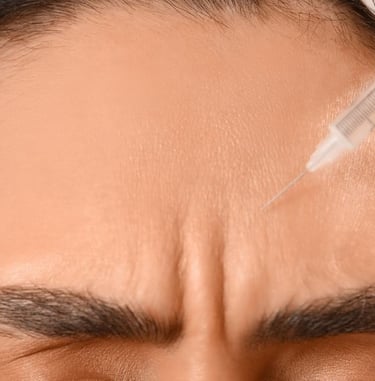
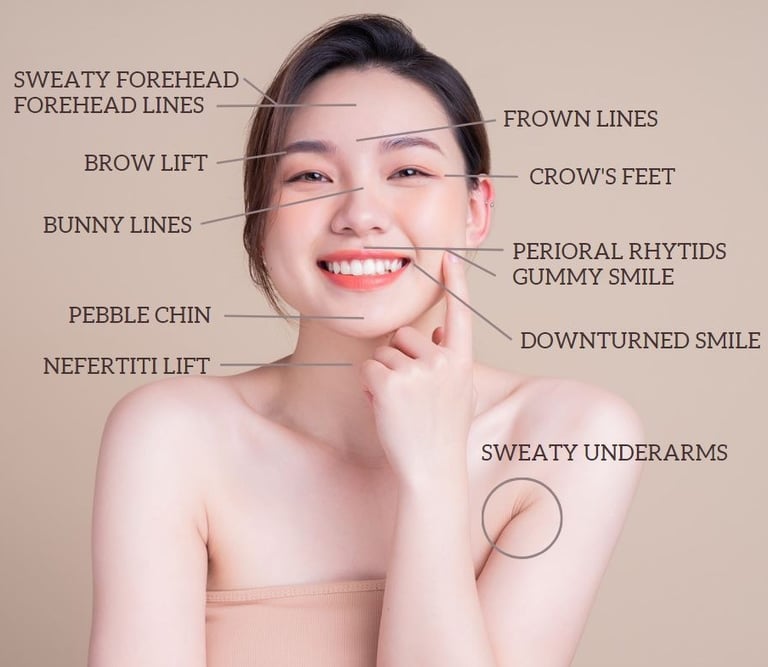
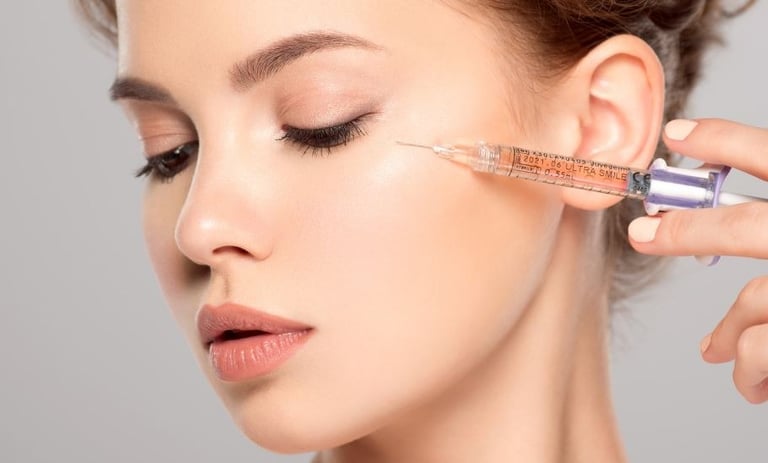
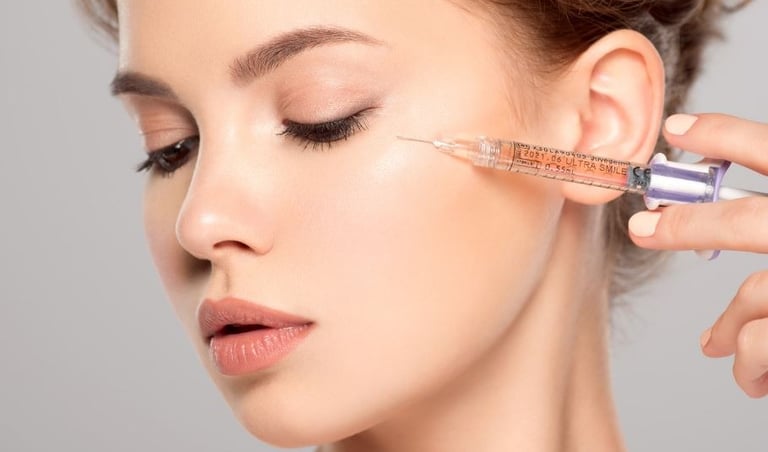
Botulinum Toxin A works by blocking nerve signals within the targeted muscles where it is injected, leading to temporary muscle paralysis and relaxation. Small controlled doses of botulinum toxin have been safely utilized for many years to address various conditions such as muscle spasms, excessive sweating (hyperhidrosis) and in the treatment and prevention of wrinkles. It is also used for temporal headaches and migraines.
In 2002, FDA approval extended to aesthetic therapeutic applications. Since then, Botulinum Toxin A has been used safely and extensively in the treatment and prevention of fine lines and wrinkles of the face to create a more youthful appearance.
Botulinum Toxin A is also indicated in masseteric muscle prominence (large jaw muscles) that can contribute to a square shaped, masculine jaw.
Other common aesthetic applications include treating platysma bands, shoulders (trapezius, TrapTox for a longer neckline), calves for reducing bulk, and using micro-doses (microtox) to treat seborrhoea.
The Science Behind Botulinum Toxin
The effects of Botulinum Toxin A are temporary. The molecule is consumed (broken down) over time, which causes the visible effects of Botox treatment to wear off.
This is ideal as any unwanted side effects caused by the spread of Botulinum Toxin A to surrounding non-target muscles would be reversible with time. For example, eyelid droop or asymmetry of the brows or mouth.
The effect of is predictable. Botulinum Toxin A has a dose-dependent relationship where the more units are injected into the target muscle, the stronger the effect.
This allows our doctor to customise the outcome based on the individual's preferences. For example, some may prefer to eliminate all dynamic facial lines, while others may prefer a natural effect where they wish to reduce the severity of lines, but preserve muscles of expression.
Properties of Botulinum Toxin A
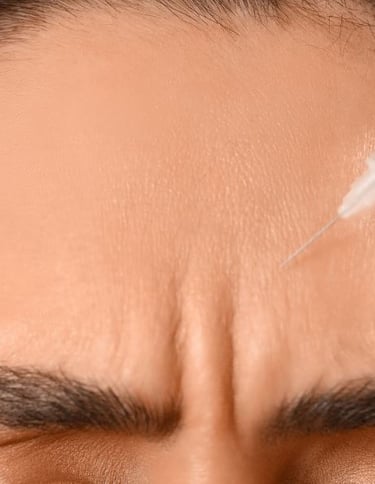
Botulinum Toxin A is suitable in treating fine lines and wrinkles, but more importantly in preventing them from forming. Fine lines and wrinkles that form with facial expression are called "dynamic lines". When toxin treatment is started early, these dynamic lines can be softened to prevent them from settling into "static lines".
Botulinum Toxin A alone may not be enough in treating moderate to severe deep-set wrinkles called "static lines", that have set in over the years and are present even at facial rest. In these cases, additional therapies are needed.
Botulinum Toxin A treatments last 3-4 months typically, but with repeated treatment, intervals may be prolonged to 6-9 months. Lines and wrinkles do not become worse after stopping toxin treatment.
Who is Suitable for Botulinum Toxin A?
Botulinum Toxin A for Hyperhidrosis
During research for aesthetic applications, researchers found that Botulinum Toxin A improves hyperhidrosis, a condition of excessive sweat. Excessive sweat is a disorder characterized by excessive functioning of the sudomotor sweat control system.
This can affect daily function or have negative psychosocial effects.
Sweat reduction can be achieved with toxin injections and aims to restore function and mitigate the psychological and social impact from hyperhidrosis. The most common areas of treatment for hyperhidrosis are the underarms and palms.
This treatment lasts for 4 to 6 months, varying between each individual.
Adjuvant Therapies
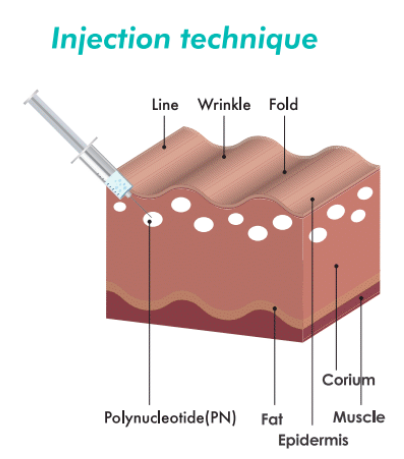
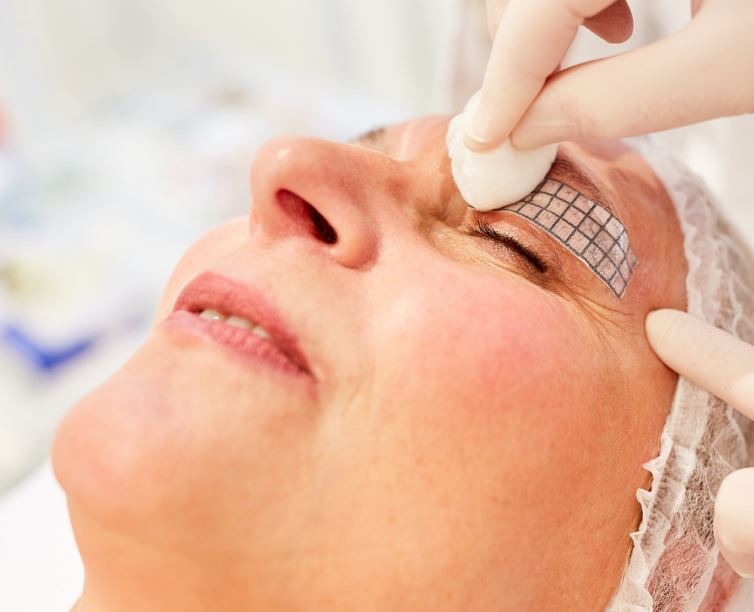
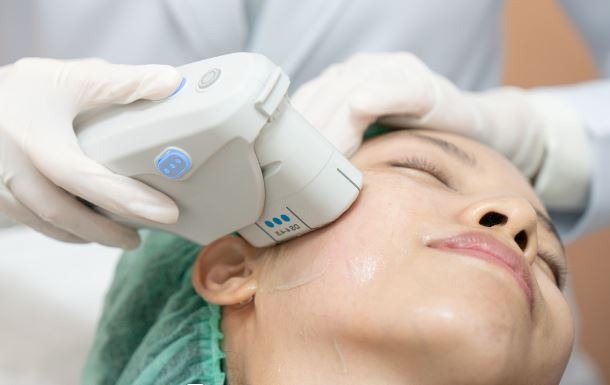
Additional therapies may be required to treat deeper lines and wrinkles, especially those that form due to natural ageing processes, such as loss of collagen and elastin in the skin. To optimise the results of treatment, we complement Botox with other energy-based devices and procedures that aid in restoring lost volume, collagen remodelling and tissue regeneration.
Exosomes
Skin Boosters (Microneedling)